Carbohydrates
Whole grains, legumes, fruits, and starchy vegetables provide energy for daily activities. We suggest choosing less-processed options when practical — oats, brown rice, and wholegrain bread are common household staples in New Zealand.
A practical reference for households seeking variety, moderation, and structure at the dinner table. This page offers general education only — not individual dietary prescriptions or clinical recommendations.
Visual Framework
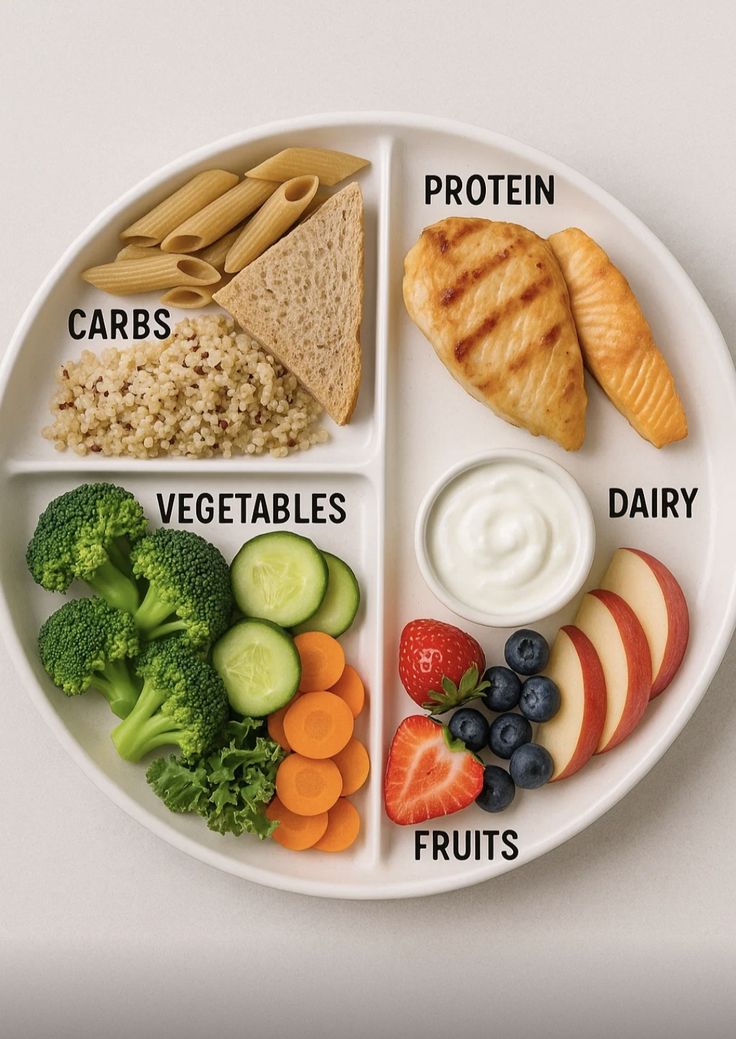
A widely referenced model divides a standard dinner plate into sections: roughly half for vegetables and fruits, one quarter for whole grains or starchy vegetables, and one quarter for protein-rich foods.
This framework is a starting point, not a rigid rule. Teenagers, active adults, and young children may need different proportions on any given day. The goal is visual variety rather than mathematical precision.
We encourage families to treat this model as a conversation tool — something children can observe and discuss rather than a chart to enforce at every sitting.
Food Groups
Carbohydrates, proteins, and fats each play a role in a varied diet. Here is how we discuss them in family-friendly terms.
Whole grains, legumes, fruits, and starchy vegetables provide energy for daily activities. We suggest choosing less-processed options when practical — oats, brown rice, and wholegrain bread are common household staples in New Zealand.
Include a mix of animal and plant sources across the week: eggs, fish, poultry, tofu, lentils, and beans. Rotating sources supports dietary variety without requiring elimination of any food group.
Unsaturated fats from olive oil, avocados, nuts, and seeds contribute to flavour and satiety. Small amounts of butter or coconut oil can also fit within a balanced household approach.
Found in vegetables, fruits, whole grains, and legumes. Including fibre-rich foods as part of a varied weekly menu is a simple way to add diversity to family meals.
Vitamins and minerals are distributed across food groups. A colourful plate over the course of a week can contribute to dietary variety. Questions about supplements should be directed to a registered health professional.
Household Considerations
Children, adolescents, and adults have different energy needs. These general reference points help with planning — always adjust based on appetite and activity levels.
Smaller plate sizes, finger-friendly vegetables, and one reliable protein source per meal. Allow children to self-regulate portions when safe to do so.
Growing appetites may require larger grain and protein servings. Include adolescents in meal preparation to build independent food skills.
Model balanced choices without commentary on quantity. Adults benefit from the same plate framework with portion sizes adjusted to individual energy expenditure.
Encourage a glass of water upon waking. Pair with breakfast that includes both fluid-rich foods and a drink.
Reusable bottles reduce reliance on purchased beverages. Refill stations are increasingly available across Wellington.
Limit caffeinated drinks in the late afternoon. Chamomile or peppermint infusions can be a calming pre-bedtime option for adults.
Practical Adjustments
Small substitutions introduced gradually can diversify nutrient intake without overhauling favourite meals.
Introduce mixed grains before a full switch. Half-and-half blends ease the transition for reluctant eaters.
A crunchy snack alternative that adds fibre and plant protein to afternoon routines.
Tuna, salmon, chickpeas, and lentils offer versatile protein for lunches and light dinners.
Overnight oats prepared the evening before save morning time and reduce added sugar at breakfast.
Shopping Skills
New Zealand food labels display nutritional information per serving and per 100 grams. Focus on these elements when comparing products:
Label reading is a skill that improves with practice. Involving older children in supermarket comparisons can turn it into a practical learning activity.
Weekly Planning
1
Inventory — check fridge and pantry before shopping
2
Draft — outline four to five dinners without detailed recipes
3
Shop — buy ingredients that serve multiple planned meals
+
Flex — reserve one open night for leftovers or improvisation
Explore our recipe collection for meals that reflect balanced composition principles, or contact us to discuss a personalised planning session.
The balance guidance on this page is general educational information only. It is not medical or dietetic advice and is not a substitute for individual assessment by a registered New Zealand health professional. Nutritional needs vary by person and life stage.